Trump blames old equipment for nationwide FAA ground stop, presses Congress for upgrade money
The full story
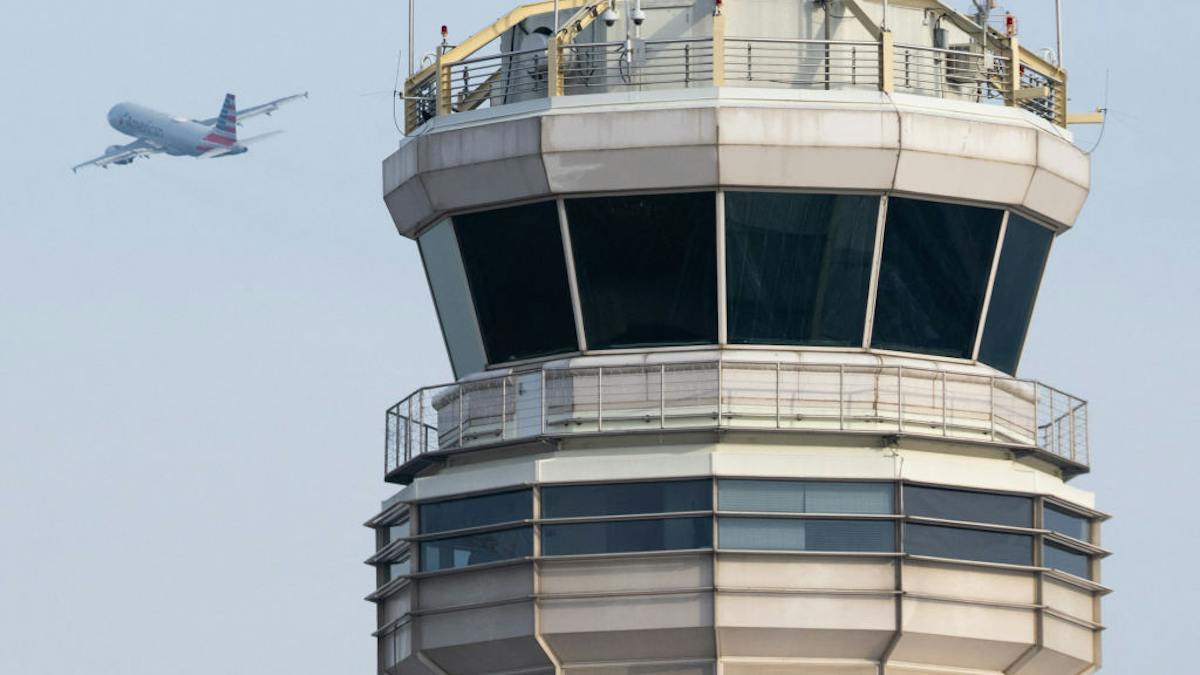
Here is the full story. President Donald Trump said Monday that the nationwide ground stop that halted U.S. flight departures on Friday was the result of aging air traffic control equipment, and he urged Congress to provide the money to replace it. "Essentially, what you saw on Friday was very, very old equipment that had a heart attack," he told reporters on the South Lawn of the White House before leaving for Asia, where he is due to attend the ASEAN summit in the Philippines and the Asia-Pacific Economic Cooperation leaders' meeting in China.
The Federal Aviation Administration stopped departures nationwide at 3:54 p.m. Eastern on Friday, November 13, after a communications failure first reported in the Chicago area spread to several systems. The stop lasted more than four hours. More than 10,000 flights were disrupted, an estimated 1.5 million travelers were stranded, and cancellations continued through the weekend, with about 7,000 on Saturday alone.
Transportation Secretary Sean Duffy told reporters on Friday night that routers "actually got overloaded with data," producing inconsistent data. He has said a router newly installed as part of the FAA's move from copper wiring to fiber optics was sending roughly a thousand connection attempts every four to five seconds, swamping the system. By Saturday, Duffy said operations were slowly returning to normal and that it was safe to fly, while warning that travelers would keep seeing delays and cancellations as airlines rescheduled flights and moved aircraft and crews.
Trump said some of the equipment is about 55 years old and that work to modernize it should have been done decades ago. He said his administration could carry out the upgrade "with very little trouble" if Congress supplies the funding. He also said the previous administration had connected copper to glass, which he said wasted money. "I don't take any responsibility," Trump said when asked about the ground stop, adding that Duffy and his team had acted well and that no one was hurt. He said the administration had been seeking the money for two years and that he expected Congress would now provide it. On Sunday, he had also called on lawmakers to approve funds for the air traffic system.
During the same exchange, a reporter asked whether he was spending too much time on improvements to the White House while the FAA struggled. Trump called the reporter "pathetic," said the beautification work takes him about 10 minutes a day, and said he pays for it himself, calling the cost "peanuts."
The administration is asking Congress for $30 billion to overhaul the air traffic control system, on top of $12.5 billion approved last year in the One Big Beautiful Bill Act. The proposal, the Modern Skies Act, was introduced in September with the backing of Duffy and FAA Administrator Bryan Bedford. According to the Transportation Department, nearly 60 aviation groups, including the air traffic controllers' union, support it. The Reason Foundation has argued that only about 40 percent of the bill's money goes to air traffic control modernization.
Aviation experts say funding is only part of the challenge. Robert Joslin, a former FAA flight test pilot and chief scientific and technical advisor who now teaches at Embry-Riddle Aeronautical University, said the hardest task is integrating new technology and procedures into a system that must keep running. He said each piece of safety-critical equipment, and the training for it, must pass bench tests, simulation and a limited real-world trial before going nationwide, though regulators have begun leaning on industry consensus standards to move faster. Some facilities still track flights on paper strips, which he called safe but slow. Timothy Johnson, who coordinates the air traffic control program at Hampton University, said the copper-to-fiber switch is the core of the work, that it is split among several contractors, and that the money must also cover trained controllers. "12.5 billion is a lot of money," he said, adding that the system needs double that, if not more.
Reported by
Get this email every day
Get the day's top story delivered to your inbox each morning by signing up below.
Other news / Full articles
 Trump heads to Asia for talks with Xi and Putin, says Kim Jong Un meeting possible
 Van Hollen challenges Schumer for Senate Democratic leader in first contested race since 1994
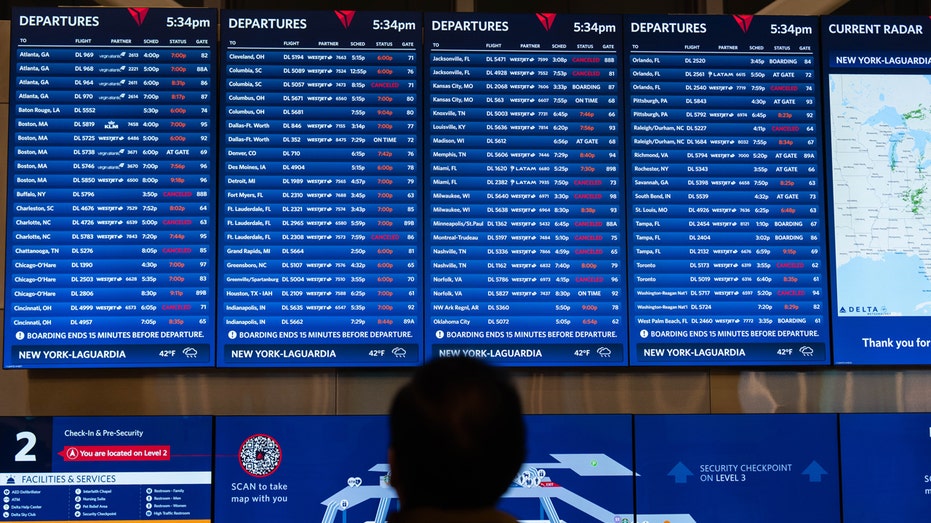 Router failure triggers longest nationwide FAA ground stop in 25 years; Trump presses Congress for funds
 Van Hollen presses challenge to Schumer for Senate Democratic leadership
 White House counsel warns House Democrats over planned oversight subpoenas
 Jensen Huang resigns from Nvidia amid affair allegations as senator questions oversight of China chip sales