Router failure triggers longest nationwide FAA ground stop in 25 years; Trump presses Congress for funds
A communications failure halted U.S. departures for more than four hours Friday, snarling travel through the weekend and prompting calls for new air traffic control funding.
The full story
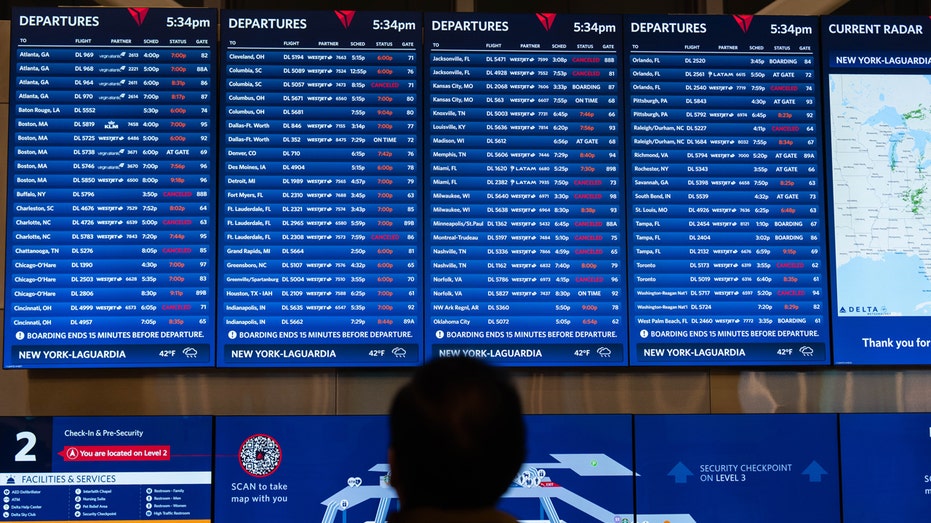
Here is the full story. Departures across the United States came to a halt for more than four hours on Friday after a communications failure disrupted the systems that guide planes between and into airports. It was the longest nationwide ground stop in 25 years. About 3,500 flights were airborne at the time, and all of them landed safely. The disruption stranded travelers, scrambled college and professional sports schedules, and left airlines working through cancellations into Sunday.
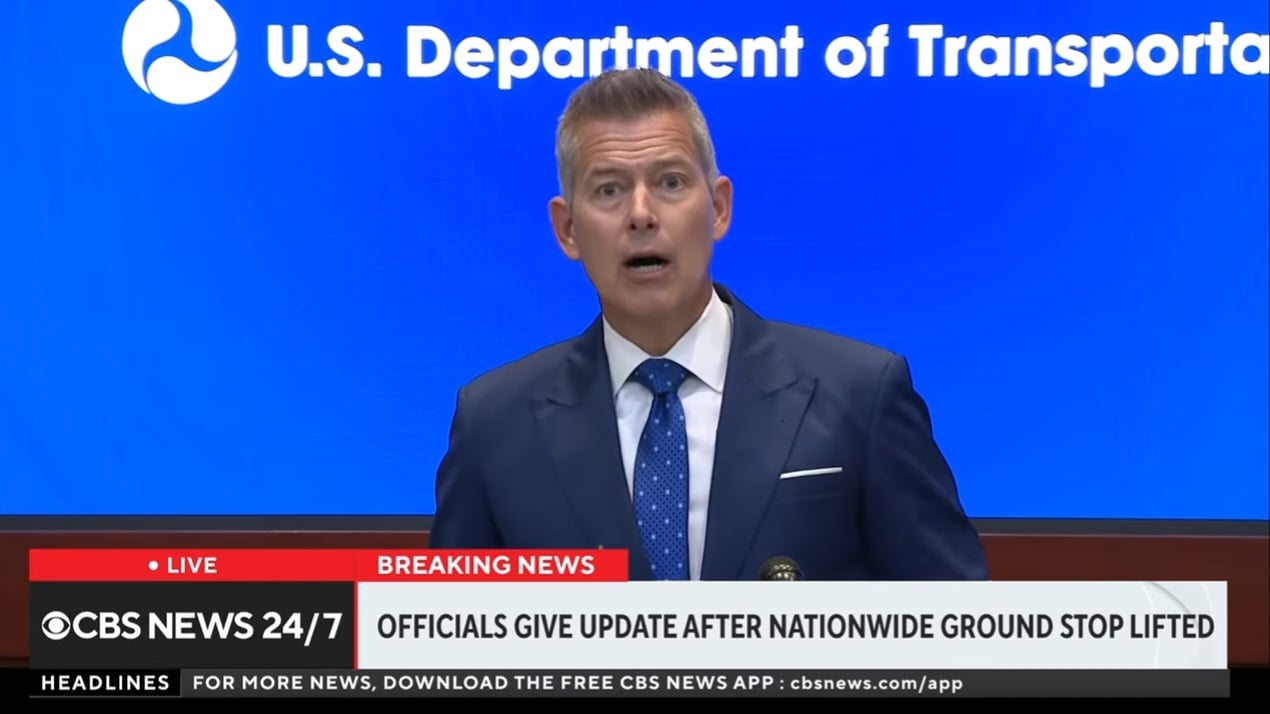
Transportation Secretary Sean Duffy said officials detected instability in radar data and communications at 3:36 p.m. Eastern time, affecting the Air Route Traffic Control Centers. The Federal Aviation Administration halted departures nationwide at 3:54 p.m., in an alert citing "extraordinary circumstances" and safety. Duffy later said not every radar feed or telecommunications link had been lost, but the inconsistent data was enough to warrant the stop as a precaution. The FAA lifted the order at 8:15 p.m., and planes began leaving airports including LaGuardia, Los Angeles International and Reagan National. The Transportation Department said more than 8,000 flight operations resumed Friday night.
At a Saturday briefing, Duffy said contractor L3Harris had been replacing aging copper communications lines with fiber-optic connections at a remote FAA site because the copper service was being discontinued. During that work, a router began generating more than 1,000 connection attempts every four to five seconds, overwhelming other routers and disrupting communications and radar feeds. Rebecca Guy, the FAA's technology chief, said two locations, one in El Dorado, Arkansas, and a radar site in Amarillo, Texas, were "pinging our network at a very high rate." Duffy said the Amarillo system had been replaced about three weeks earlier, and the routers were being examined at an L3Harris laboratory in Florida. "We think it was the installation or the router that was the bad actor," he said. The Wall Street Journal reported late Saturday that the router in El Dorado caused the outage. Duffy said the router had been bought in 2001 and was obsolete by 2006. He said officials would reevaluate when such maintenance should be done.
Federal officials also looked at whether the failure was malicious. Trump convened a call Friday with intelligence officials, the FBI and the Cybersecurity and Infrastructure Security Agency, and Duffy said intelligence partners saw none of the usual signs of a cyberattack. Homeland Security Secretary Markwayne Mullin told reporters there was no indication of a nefarious attack. Duffy said there was no sign of a foreign cyberattack but left room for further investigation if new evidence emerged. White House communications director Steven Cheung wrote on X that the administration acted within minutes and credited Trump's leadership.
The recovery was slow. Duffy warned that reopening the airspace depended on airlines having crews available. By 2 p.m. Eastern on Sunday, FlightAware counted 5,280 delayed and 1,709 canceled flights within, into or out of the U.S., with Dallas Fort Worth, Atlanta and Chicago O'Hare among the hardest hit. FAA Administrator Bryan Bedford said "the worst is behind us," and officials first expected normal operations by Sunday night, but Duffy said Sunday morning that full recovery would probably come Monday. Sports teams were caught up in the delays. Utah's charter crew ran out of hours, pushing its game at Arizona to a 10:30 p.m. Eastern kickoff Saturday, and the Ole Miss and Oklahoma game was moved to Sunday. Oklahoma athletic director Roger Denny said the school objected but was told it would face a forfeit if it refused.
The outage quickly turned into a funding debate. On Truth Social, Trump wrote that if Congress approves the money, "we can get it built quickly and efficiently," called much of the current system 50 years old, and said the work should be done "all at once." He also blamed the Biden administration for setting it back. Duffy said the $12.5 billion Congress already provided covers radios, radars, electronic flight strips and telecom lines, with equipment in place by the end of 2028, but that the money was tied to hardware and does not cover the core software, or, as he put it at another point, a replacement telecommunications network. Asked on CNN whether he took responsibility, Duffy said he did for his own work but also for systems "given to me by prior administrations." United Airlines CEO Scott Kirby praised the decision to halt flights and said, "This moment must be a call to action," adding that lawmakers of both parties were committed to modernizing the system.
Reported by
Get this email every day
Get the day's top story in your inbox every morning. Sign up below.
Other news / Full articles
 Van Hollen presses challenge to Schumer for Senate Democratic leadership
 White House counsel warns House Democrats over planned oversight subpoenas
 Jensen Huang resigns from Nvidia amid affair allegations as senator questions oversight of China chip sales
 FAA nationwide ground stop traced to contractor work as Duffy seeks $50 billion
 Hecklers interrupt Hakeem Jeffries at Democratic 'What's Next' conference in Denver
 Stephen Miller requires counsel approval for White House staff meetings with lobbyists