Trump, Xi and Putin sign joint declaration after first three-way summit in China
The U.S., Chinese and Russian leaders issued a four-point statement on oil supply, nuclear risk, U.N. reform and limits on the International Criminal Court.
The full story
Here is the full story.
The leaders of the United States, China and Russia ended their first three-way summit with a joint statement on four issues: energy supply, nuclear risk, reform of the United Nations and the reach of the International Criminal Court. President Donald Trump, President Xi Jinping and President Vladimir Putin met Thursday on the sidelines of the Asia-Pacific Economic Cooperation summit in China, and each then released an identical text titled the "Declaration toward Peace." Trump said the leaders discussed "world peace." The leaders did not mention Iran by name in public.
According to the declaration, the three leaders held an in-depth exchange on the international situation and committed to maintaining strategic stability and international security. On energy, the text says the three countries plan to increase production and supply of refined petroleum products for the benefit of all nations, and it reaffirms the importance of stable energy flows. The pledge comes amid energy shocks tied to the conflict with Iran and the war between Russia and Ukraine, including disruptions to oil shipments through the Strait of Hormuz and the Bab el-Mandeb Strait. China is the largest buyer of Middle Eastern oil outside the region.
On nuclear weapons, the leaders reaffirmed that a nuclear war cannot be won and must never be fought, and said their countries will hold a dialogue on reducing nuclear risks and preventing the spread of nuclear weapons. The New Strategic Arms Reduction Treaty between Russia and the United States lapsed in February, and all three countries are modernizing and expanding their nuclear arsenals. The declaration does not set out specific steps.
As permanent members of the U.N. Security Council, the three countries committed to reform the United Nations so it can respond more effectively to global challenges and stay true to its mission of international peace and security. The text does not say what that reform would involve. The leaders also said the principle of state consent and respect for the immunities of state officials are of paramount importance, and that the International Criminal Court and similar bodies must not abuse their jurisdiction. The court is prosecuting former Philippine President Rodrigo Duterte for crimes against humanity linked to his anti-drug campaign, and has sought the arrest of Israeli Prime Minister Benjamin Netanyahu over alleged war crimes. The Trump administration sanctioned the court in October. During the trip, Trump also met Philippine President Bongbong Marcos as part of a push for Pax Silica, an artificial intelligence supply chain agreement that the State Department treats as a priority.
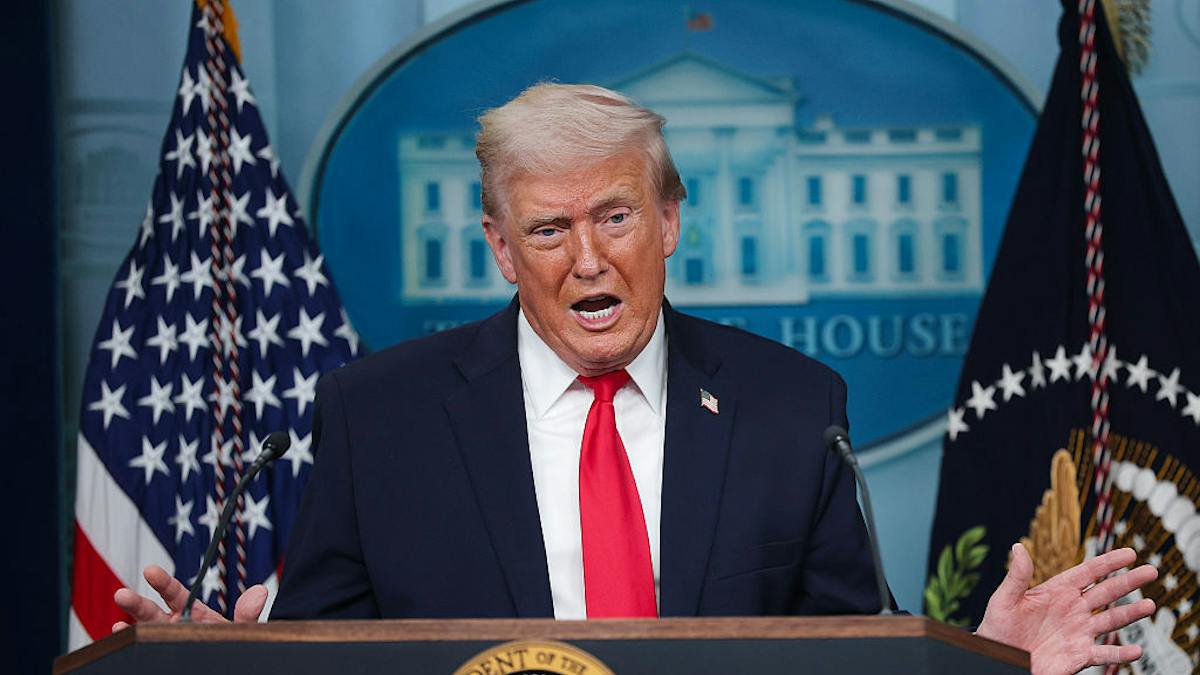
At a press conference Friday, Trump said he and Xi agreed to establish "joint guardrails" on artificial intelligence. He said the United States leads in the field, with China second and no one else close. "Whoever wins SI wins," he said, using his term for the technology, which stands for superintelligence; he said Xi also likes the term. Trump said the country must make use of data centers and that he would put a "tremendous tax" on companies that try to build them outside the United States. "We want them to build it here," he said, naming Texas, California and West Virginia as possible locations. Asked about his firing on Thursday of cybersecurity director Sean Cairncross, Trump said he "wasn't good enough."
Iran responded quickly. Iran's state-run news agency IRNA reported Friday on comments by Mohammad Mokhber, an adviser to supreme leader Mojtaba Khamenei, who said the summit proved "the United States can no longer forge an alliance against Iran." Mokhber said Trump "left with empty hands and an unfavorable statement," and called the security of the Persian Gulf and the Strait of Hormuz Iran's red line. He did not say which part of the declaration was unfavorable to the United States. Breitbart reported that the declaration's calls for stable oil flows and non-proliferation ran against Iran's priorities, and noted that in April Xi told Saudi Crown Prince Mohammed bin Salman that the Strait of Hormuz "should maintain normal passage."
Iran's Foreign Minister Abbas Araghchi called an emergency meeting of the Organization of Islamic Cooperation for Friday on the situation in Gaza, saying Gaza urgently needs the blockade lifted and humanitarian aid allowed in. The day before, after talks with diplomats in Oman, he said there is a growing belief across the region that security must come from within the region, without interference from foreign powers. In Europe, countries backing Ukraine against Russia, known as the "coalition of the willing," also held a summit after the trilateral meeting.
Reported by
- The Daily Signal: Trump Reveals Outcome of Discussions With Xi on AI
- TheBlaze: Here's what Trump, Xi, and Putin agreed to in China
- Breitbart: Iran Rebuffs United Front Against It at Trump-Xi-Putin Summit
Get this email every day
Get each day's top story delivered to your inbox by signing up below.
Other news / Full articles
 Trump calls Vance's view that Iran war cost midterms 'accurate,' says he would act again
 Trump threatens 'tremendous tax' on U.S. companies building data centers abroad
 Trump fires national cyber director as string of tech outages worries lawmakers
 Anthropic shares jump in record-setting Nasdaq debut as wider market falls
 Trump posthumously pardons baseball hit king Pete Rose over 1990 tax conviction
 House Democrats nominate Hakeem Jeffries for speaker in lopsided caucus vote