Nvidia halts licensed China chip shipments after Jensen Huang's resignation
Under interim CEO Colette Kress, Nvidia has stopped shipping licensed Hopper data-center chips to China, and its board says it does not intend to reinstate Huang.
The full story
Here is the full story. Nvidia has stopped shipping its U.S.-licensed Hopper data-center chips, including the H200, to China. Interim chief executive Colette Kress announced the halt during the company's third-quarter earnings call, days after co-founder Jensen Huang resigned as CEO. Huang, who led the chipmaker for more than three decades, stepped down after revelations of an extramarital affair with a woman U.S. officials suspect may be a Chinese spy. The espionage allegations have not been proven. His resignation came shortly after Nvidia's board opened an investigation into the affair and the spying allegations.
She did not explain the reason for the decision or say whether the halt is permanent. Nvidia sold $2.4 billion of licensed Hopper products to China in its fiscal third quarter, and its forecast for the current quarter assumes zero data-center compute revenue from China. The company had previously told clients to keep their Chinese chip sales at 49 percent of their sales or less.
The decision reverses Huang's push for Chinese sales. He had lobbied the Trump administration on the issue and opposed strict export controls. In December 2025, after a meeting with Chinese President Xi Jinping, President Donald Trump approved H200 sales to approved customers in China, with 25 percent of the proceeds going to the United States. The Commerce Department announced new rules the day before the earnings call that restrict Chinese firms' access to advanced American chips through data centers abroad. Kress said Nvidia was still studying them, but that demand was far enough ahead of supply that she expected results to stay strong however much the rules cut sales tied to China.
Kress raised Nvidia's sales growth forecast for next fiscal year to 75 percent, from about 70 percent. The company said its new Rubin systems brought in nearly $20 billion in their first quarter of shipments. Shares opened up about 3 percent after the report but closed Wednesday down around 2.9 percent, and they are down 30 percent from a month earlier. Huang made his first public statement since resigning only hours before the report, saying customers, employees and investors wanted him back. Nvidia's board said it "does not intend to reinstate" him, while the company searches for a permanent chief executive.
At the center of the wider scandal is Megaspeed, a company that was spun off from a Chinese gaming firm in 2023 and later named an Nvidia Cloud Partner. Megaspeed has denied any wrongdoing. The U.S. government opened an investigation in 2024 over concerns that it was illegally diverting chips to China. Records viewed by The Wall Street Journal show it arranged to send nearly $12 billion worth of top Nvidia chips to companies in China in 2024 and 2025. A Bloomberg investigation in 2025 reported that Megaspeed had imported 50,000 more chips than Nvidia found in its data centers. Alice Huang, a managing director at Megaspeed, was questioned in Singapore over chip diversion concerns and later barred from reentering that country. She was never charged. In early 2026, Indonesian police raided a Megaspeed subsidiary at the FBI's request.
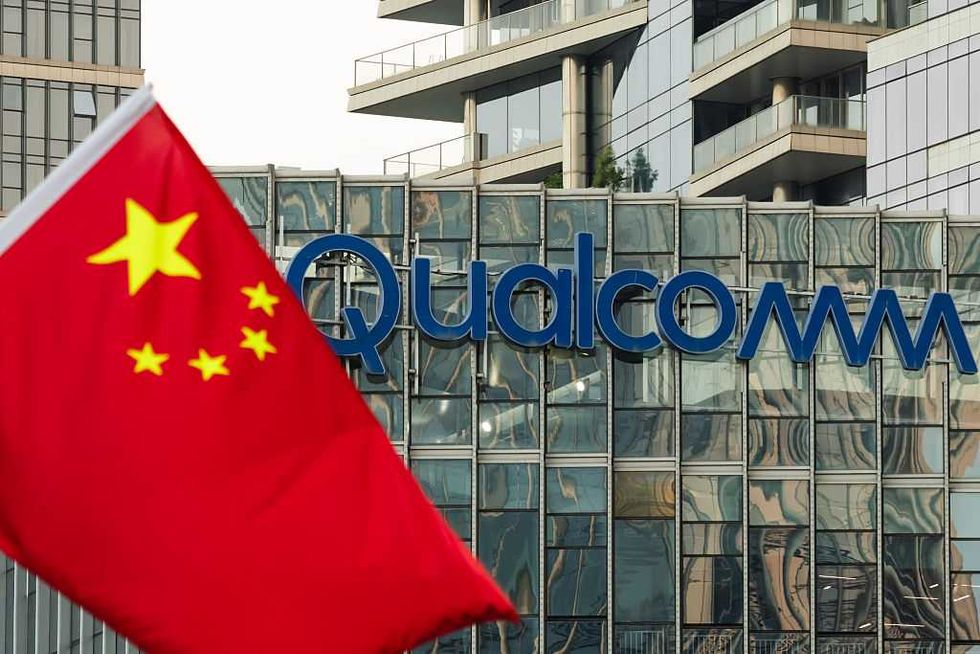
The Commerce Department's investigation into Megaspeed was reportedly halted in 2025 after inquiries from Nvidia's general counsel, and it has since moved to the Justice Department. Megaspeed has not been added to the Entity List, a federal trade blacklist. "Treasury, War, USTR and State … were in favor of putting Megaspeed on the Entity List for months," Treasury Secretary Scott Bessent said. "But Commerce has the pen." Federal prosecutors have also arrested or indicted several people in other chip smuggling cases, including a co-founder of Super Micro, another Nvidia partner, who is accused of diverting about $2.5 billion in Nvidia-powered servers to China. The fallout has also turned attention to other U.S. chipmakers with large Chinese business, such as Qualcomm, which attributes 42 percent of its fiscal 2026 revenue to customers headquartered in China.
Reported by
- TheBlaze: Qualcomm has a China problem. America has a Qualcomm problem.
- The Daily Signal: Nvidia Scandal Exposes Holes in America’s China Chip Controls
- Breitbart: Breitbart Business Digest: Nvidia’s China Business Is on Borrowed Time
- Daily Caller: Nvidia Walks Away From $2.4 Billion In China Sales Days After CEO’s Spy Scandal
Get this email every day
Sign up below to get this news email in your inbox every day.
Other news / Full articles
 House Democrats nominate Hakeem Jeffries for speaker in 251-11 caucus vote
 Intelligence chief and DHS secretary testify to House panel on Iran threats
 Mary Peltola declared winner of Alaska's U.S. Senate race over Sen. Dan Sullivan
 Treasury sanctions more than two dozen targets in Iran's shadow banking network
 Court unseals redacted warrant filings in federal investigation of Rep. Ilhan Omar
 Appeals court clears Army to detonate degraded explosives at Iowa ammunition plant